Where would you like to start? Explore a subject, check your understanding, or bring a question.
Choose from Subject Blocks No learning request is needed. Start with a diagnostic challenge if you want to test your understanding, or use the introductory lessons to review. Each course keeps its own work.
Middle School PRE-ALGEBRA Introductory activities
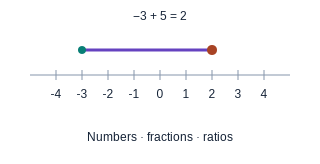
Pre-Algebra Signed numbers, fractions, ratios, and expressions.
Start Pre-Algebra → Shared school foundations · 15 questions → More activities & scope Test your understanding · 4 problems → Explore two field projects → Test your intuition → Four introductory lessons; selected foundations, not a complete school course.
INTEGRATED SCIENCE 6–10 Introductory activities
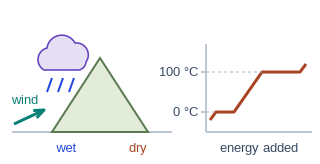
Integrated Science 6–10 Model cells, energy, atoms, forces, ecosystems, and chemical reactions.
Start Integrated Science 6–10 → Check foundations · 15 questions → More activities & scope Test your understanding · 4 problems → Test your intuition → All five units are open, one lesson per California segment, grades 6–10. Selected foundations, not a full year.
High School ALGEBRA I Introductory activities
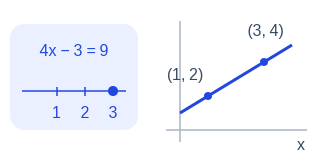
Algebra I Equations, linear functions, systems, and quadratic roots.
Start Algebra I → Shared school foundations · 15 questions → More activities & scope Test your understanding · 4 problems → Explore two field projects → Test your intuition → Four introductory lessons. Continue with the original visual algebra activities for more practice.
GEOMETRY Introductory activities
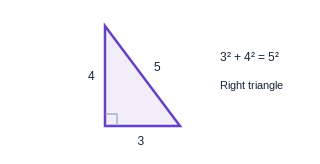
Geometry Angles, triangle relationships, similarity, and measurement.
Start Geometry → Check foundations · 15 questions → More activities & scope Test your understanding · 4 problems → Explore two field projects → Test your intuition → Four introductory lessons. Formal proof, circles, and transformations come later.
ALGEBRA II Introductory activities
Algebra II Polynomial factors, rational restrictions, exponentials, and logarithms.
Start Algebra II → Check foundations · 15 questions → More activities & scope Test your understanding · 4 problems → Explore two field projects → Test your intuition → Four introductory lessons. A full function-analysis course comes later.
BASIC LOGIC Introductory activities
Basic Logic Statements, truth tables, valid arguments, fallacies, and syllogisms.
Start Basic Logic → Check foundations · 15 questions → More activities & scope Test your understanding · 4 problems → Explore two field projects → Test your intuition → Four introductory lessons. Symbolic logic with ∀ and ∃ and formal proof come later.
PRE-CALCULUS Introductory activities
Pre-calculus Connect function rules to graphs, angles, and growth.
Start Pre-calculus → Check foundations · 15 questions → More activities & scope Test your understanding · 4 problems → Explore two field projects → Test your intuition → Selected introductory activities and a separate foundation check.
COORDINATE GEOMETRY Lessons and guided projects
Coordinate Geometry High school → university bridge Connect coordinates, distance and equations through four lessons and two guided projects.
Start Coordinate Geometry → Check foundations · 15 questions → More activities & scope Test your understanding · 4 problems → Explore coordinate projects → Test your intuition → Four short lessons, two six-step projects, and foundation and understanding checks.
PHYSICS 1 FOUNDATIONS Introductory activities
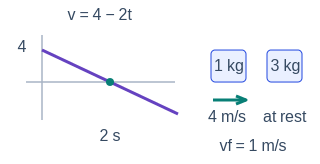
Physics 1 Foundations Explore motion, forces, energy, momentum, rotation, oscillations, and fluids.
Start Physics 1 Foundations → Check foundations · 15 questions → More activities & scope Test your understanding · 6 problems → Explore two field projects → Test your intuition → Six introductory lessons with algebra and evidence; selected foundations, not a complete advanced course.
PHYSICS 2 FOUNDATIONS Introductory activities
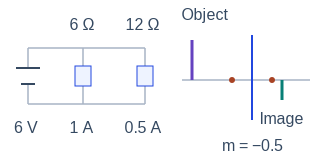
Physics 2 Foundations Connect heat, electric fields, circuits, magnetism, optics, waves, and photons.
Start Physics 2 Foundations → Check foundations · 15 questions → More activities & scope Test your understanding · 6 problems → Explore two field projects → Test your intuition → Seven introductory lessons; start after basic mechanics. Selected foundations, not a complete advanced course.
College Level CALCULUS Introductory activities
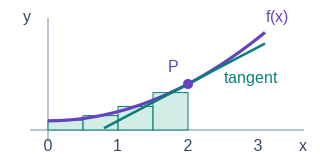
Calculus Explore limits, slopes, accumulation, and kinds of integrals through interactive graphs.
Start Calculus → Check foundations · 15 questions → More activities & scope Test your understanding · 4 problems → Explore two field projects → Test your intuition → Limits, derivatives, accumulation, and indefinite and improper integrals are open.
STATISTICS Introductory activities
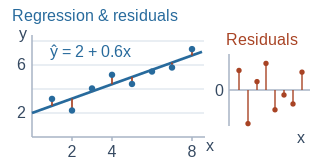
Statistics Read distributions, compare summaries, and examine study design.
Start Statistics → Check foundations · 15 questions → More activities & scope Test your understanding · 4 problems → Explore two field projects → Test your intuition → Statistics foundations and applied projects are open.
PROBABILITY Introductory activities
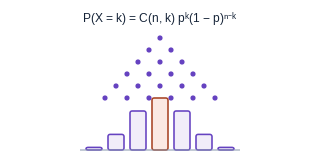
Probability Count chances, weigh evidence and find expected values through ten proof projects.
Start Probability → Check foundations · 15 questions → More activities & scope Test your understanding · 4 problems → Explore 10 proof projects → Test your intuition → High-school foundations to university ideas. Complete proofs and separate project notes.
QUANTITATIVE REASONING Introductory activities
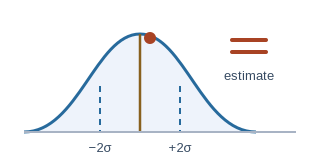
Quantitative Reasoning Estimate, approximate and decide fast under uncertainty, then check each call with a model.
Start Quantitative Reasoning → Check foundations · 15 questions → More activities & scope Test your understanding · 4 problems → Test your intuition → All three parts are open: twelve lessons from estimates to decisions. Selected foundations, not a full course.
LINEAR ALGEBRA Introductory activities
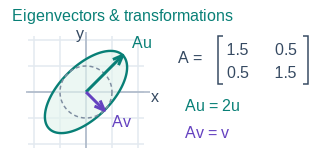
Linear Algebra Connect vectors and matrices with geometric transformations.
Start Linear Algebra → Check foundations · 15 questions → More activities & scope Test your understanding · 12 problems → Explore two field projects → Test your intuition → Selected two-dimensional vector and matrix activities.
NUMBER THEORY Introductory activities
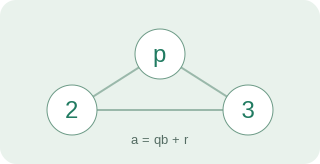
Number Theory Explore divisibility, primes and congruences through eleven proof-based projects.
Start Number Theory → Check foundations · 15 questions → More activities & scope Test your understanding · 4 problems → Explore 11 proof projects → Test your intuition → High-school foundations to university ideas. Complete proofs and separate project notes.
DISCRETE MATHEMATICS Introductory activities
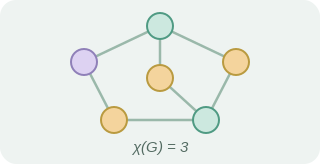
Discrete Mathematics Count, connect and prove through ten projects on graphs, counting, recurrences and induction.
Start Discrete Mathematics → Check foundations · 15 questions → More activities & scope Test your understanding · 4 problems → Explore 10 proof projects → Test your intuition → High-school foundations to university ideas. Complete proofs and separate project notes.
GAME THEORY Introductory activities
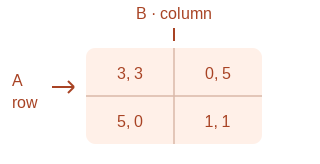
Game Theory Compare strategic choices through payoff tables, best responses, and Nash equilibria.
Start Game Theory → Check foundations · 15 questions → More activities & scope Test your understanding · 15 questions → Explore projects & cases → Test your intuition → Four lessons in English, a 15-question foundation check, two bilingual projects and one case study.
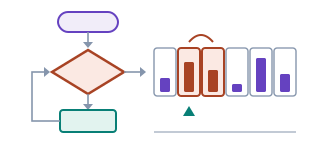
Computer Science Follow algorithms step by step, then question and improve them.
Cross-disciplinary Projects Problems that need several subjects at once, with animated models and reference proofs.
CROSS-DISCIPLINARY Guided project · 6 steps
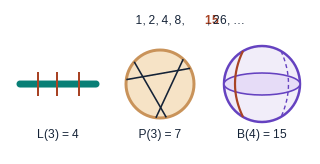
How many pieces can n cuts make? Geometry · Algebra II · Discrete Mathematics · Basic Logic Cut a stick, a pizza and a ball, and find out why the count stops doubling after 8.
Start the project → More activities & scope Related Intuition Lab activity → One project in six steps with animated models, checked answers and reference proofs. Explanations remain pending review.
CROSS-DISCIPLINARY Guided project · 6 steps
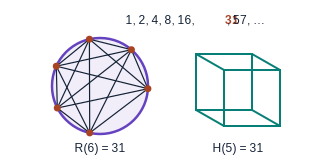
Two puzzles, one sequence Geometry · Discrete Mathematics · Algebra II · Basic Logic Chords of a circle and cuts in four dimensions both start 1, 2, 4, 8, 16. Find out where the doubling stops and why the two always agree.
Start the project → More activities & scope Related Intuition Lab activity → One project in six steps with animated models, checked answers and reference proofs. Explanations remain pending review.
CROSS-DISCIPLINARY Guided project · 6 steps
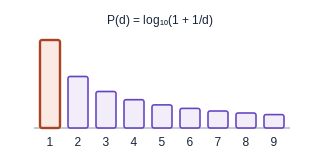
Why do so many numbers start with 1? Statistics · Algebra II · Pre-calculus · Number Theory Do the powers of 2 start with each digit equally often? Find the pattern with logarithms, prove it, and test data sets with chi-square.
Start the project → More activities & scope Related Intuition Lab activity → One project in six steps with animated models, checked answers and reference proofs. Explanations remain pending review.
CROSS-DISCIPLINARY Guided project · 6 steps
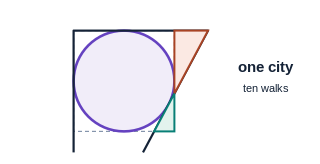
One round city, ten right triangles Geometry · Algebra I · Coordinate Geometry · Number Theory Ten walks past one round city, from a book of 1248. Derive the ten rules for its diameter from areas, and compare the answers.
Start the project → More activities & scope Related Intuition Lab activity → One project in six steps with animated models, checked answers and reference proofs. Explanations remain pending review.
Fifteen mathematics courses, three science courses and one computer science course · 84 diagnostic problems, 22 field projects, two Coordinate Geometry projects, 11 Number Theory, 10 Discrete Mathematics and 10 Probability proof projects, two Game Theory projects and one case study, four cross-disciplinary projects, 16 step-by-step algorithms, 24 integrated science lessons, 12 quantitative reasoning lessons with quick rounds, and separate 15-question foundation checks in eighteen tracks. Coordinate Geometry, Number Theory, Discrete Mathematics, Probability and the cross-disciplinary projects keep separate project notebooks, and Algorithms keeps its own record; explanations and proofs remain pending review.
You can start with any course. This choice does not assign you a level.